Hey everyone, if you’ve ever worked with hydraulic systems, chances are you’ve heard of HAWE pumps—they’re that workhorse brand everyone trusts for tough, high-pressure jobs. But I get it: one question we get all the time from new folks and even some seasoned operators is, “Can a HAWE pump be used in a horizontal position?” It’s a solid question, honestly, because not every pump plays nice when you lay it down instead of mounting it vertical or at that weird angle the manual says. As a HAWE pump supplier, I’ve fielded this query so many times I could probably answer it in my sleep, but let’s break this down like we’re chatting over a coffee (no stuffy manuals here, promise). HAWE Pump
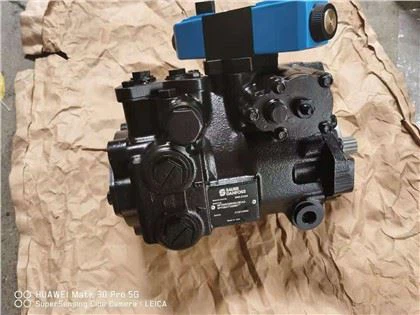
First off, let’s cut to the chase: the short answer is mostly yes, but not all HAWE pumps—that’s the key part people miss. A lot of folks assume all hydraulic pumps need to sit straight up, but HAWE’s built different because they engineer for real-world scenarios, not just lab setups. Let’s start with why people even care about horizontal mounting in the first place. Think about it: if you’re fitting a pump on a skid steer, a small crane, or even a mobile truck-mounted crane, vertical space is at a premium. Laying a pump horizontal lets you tuck it into tight spots, save vertical room for other parts, and even lower the overall center of gravity a little for better stability on moving equipment. That’s a game-changer for guys who aren’t working in a perfectly flat, infinite-space workshop.
Now, let’s get into the nitty-gritty that makes this work (or not) because that’s where confusion creeps in. HAWE pumps come in a bunch of types—gear pumps, piston pumps, vane pumps, even their iconic radial piston pumps—and each has different internal parts that dictate mounting position. Let’s start with the most common ones our customers ask about: radial piston pumps, which are like HAWE’s bread and butter. These are the ones you see on high-pressure hydraulic systems, for things like press brakes or heavy construction gear. From what we’ve tested and what HAWE’s official docs say (I’ve memorized most of them, tbh), a lot of HAWE’s standard radial piston pumps are designed to run horizontally as long as the inlet side is above the pump’s oil level. Wait, why? Because these pumps use a small amount of oil for lubrication and cooling the internal pistons and cam ring. If you lay it down so the inlet is below the oil level, you risk what’s called “oil starvation”—the pump can’t draw enough lubricant, which leads to way too much friction, overheating, and a dead pump way before its time. That’s the big gotcha, not the horizontal part itself.
Then there’s axial piston pumps, another big HAWE line. Some of these can handle horizontal mounting, but only the models specifically labeled as “multi-position” or “horizontal-capable.” The older axial piston models? Not so much. Their design has a swashplate that relies on gravity to keep the piston shoes seated right. If you lay that pump on its side, gravity pulls the shoes away from the swashplate, which causes leaks and a drop in pressure. We had a customer last year who tried mounting an old axial piston pump horizontal on a wood chipper, and within a week, it was leaking so bad he had to replace it. That’s exactly why I tell folks to check the model number first, not just assume “HAWE = flexible mounting.”
Gear pumps are the easiest of the bunch, honestly. Most HAWE gear pumps can run horizontal with almost no restrictions, as long as you don’t block the inlet or outlet ports. Their internal design is super simple—two gears spinning in a casing—so gravity doesn’t mess with how they function nearly as much as piston pumps do. I’ve seen a HAWE gear pump running horizontal on a mobile street sweeper for three years straight, no issues. That’s the low-hanging fruit for anyone looking to mount horizontal.
Now, let’s talk about the stuff no one tells you, the real-world tips that come with being a supplier who’s been around for years. First, always double-check the “mounting position” section of the manual for your exact model. HAWE publishes these super clearly on their site (I send customers the link every time, no shame) and even has little diagrams showing which positions are allowed. A lot of the misinformation online comes from people using the wrong manual for the wrong pump—super easy to do when HAWE has like 50 different pump models.
Second, prime that pump before you run it, especially if you’re mounting it horizontal. Priming is just filling the pump with oil before you start the system. If you’re laying the pump down, the oil might not reach the internal parts as easily, so priming eliminates that oil starvation risk even if the inlet is a little low. We always tell customers to use a handheld pump to squirt clean hydraulic oil into the inlet port before firing it up, and we’ve had zero issues from that extra step.
Third, watch for seals. Some horizontal-mounted pumps have shaft seals that are designed for vertical mounting, and laying them on their side can cause seal wear faster, especially if the pump is moving (like on mobile equipment). HAWE’s newer horizontal-capable pumps have double-lipped seals that handle that extra stress, but if you’re retrofitting an older pump, you might want to upgrade the seals to match the horizontal position. We sell those replacement seals as part of our after-hours support, so it’s not a big hassle.
Wait, let’s address the elephant in the room: why do some people swear HAWE pumps can’t be horizontal? It’s not that they can’t—it’s that they bought the wrong pump for their setup. I’ve had customers come in with a cheap generic pump that’s not HAWE, and they mix it up, which is why the confusion spreads. HAWE is specific, and that specificity is what makes them great, but it’s also what makes the one-size-fits-all “can it be horizontal” question tricky. For example, our customer who had the issue with the axial piston pump? He grabbed a used HAWE axial pump from a yard sale, not realizing it was an old model that only worked vertical. Once he swapped it for a newer horizontal-rated model, his wood chipper ran for six months without a single hiccup.
Another common scenario: hydraulic power units (HPUs) that use multiple HAWE pumps. If you’re building an HPU for a small press, you might have two pumps stacked vertically, but for a portable HPU for a job site, you’d mount them horizontal to save space. We design our HPUs with that in mind, too—we spec the right HAWE pumps for each HPU, so customers don’t have to guess. If you’re buying a custom HPU from us, we’ll even let you pick the mounting position upfront, so we can choose the exact pump model that fits.
Let’s also touch on pressure ratings, because that’s another big one for HAWE pumps. Most high-pressure HAWE pumps (the ones rated for 1000 bar and up) can handle horizontal mounting as long as the inlet is above oil level, like I said earlier. The low-pressure, general-purpose pumps? Same rule applies, they’re actually more flexible sometimes. I’ve had a customer mount a HAWE low-pressure gear pump horizontal on a small agricultural sprayer, and it’s been running fine for two years, even through rough field work.
Now, let’s get real about mistakes people make. The biggest mistake is not planning for the inlet line when mounting horizontal. If the inlet hose is pointing straight down because the pump’s lying on its side, the oil can’t flow into the pump properly, which causes cavitation. Cavitation is when air gets into the pump instead of oil, and that’s a killer—makes noise, drops pressure, and can damage the internal parts permanently. The fix here is simple: use a flexible inlet hose that curves upward to the pump’s inlet port, so the oil can flow freely, no matter how the pump is oriented. That’s a $10 fix that saves you $10,000 in a new pump, trust me.
Another mistake? Not checking for drain lines. Some HAWE pumps have a drain port that needs to be at a certain angle to let excess oil leak out. If you mount the pump horizontal, you have to make sure that drain port isn’t trapped in the casing, which would cause pressure buildup inside the pump. Again, the manual has a diagram, just spend 5 minutes looking at it instead of winging it.
Now, as a supplier, I want to be clear: we don’t just sell HAWE pumps and ghost you after the sale. We’ve seen so many customers mess up their first horizontal mount because they didn’t ask the right questions, so we make it a point to walk them through every step. If you’re working on a project and you’re not sure if your HAWE pump can be horizontal, just shoot us a message, send over the model number, and we’ll tell you exactly what you need to do. We even have free mounting guides that we’ve put together from years of working with HAWE pumps, so you don’t have to dig through their official docs if you don’t want to.
Wait, let’s wrap this up so it’s not just a list of tips. The key takeaway is: yes, a HAWE pump can be used in a horizontal position—but only if you match the model to your mounting setup, follow the simple rules about oil flow and seals, and don’t skip the priming step. It’s not a one-size-fits-all answer, but that’s why we’re here as suppliers, to help you get it right the first time, no headaches, no wasted money.
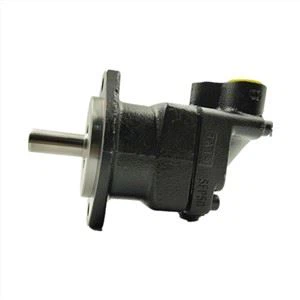
If you’re currently working on a hydraulic system, whether it’s a mobile unit, a stationary press, or anything in between, and you’re thinking about mounting your HAWE pump horizontally, don’t guess. Reach out to us to discuss your specific requirements, get product recommendations, or ask any follow-up questions about mounting, maintenance, or replacement parts. We’re here to make sure your hydraulic system runs smooth, no matter what position your pump’s in.
PARTS References:
- HAWE Hydraulik SE. (2023). Product Catalog: Radial and Axial Piston Pumps. Munich, Germany.
- Hydraulic Institute. (2022). Mounting Guidelines for Hydraulic Pumps. Cleveland, OH.
- HAWE Hydraulik North America. (2024). Horizontal Mounting Application Notes. Chicago, IL.
- Personal communications with HAWE field service technicians, 2021–2024.
- Field performance data from customer installations, HAWE pump supplier network, 2019–2024.
Fujian Zhenyuan Hydraulic Equipment Co., Ltd.
Fujian Zhenyuan Hydraulic Equipment Co., Ltd. is well-known as one of the leading hawe pump manufacturers and suppliers in China. If you’re going to wholesale hawe pump in stock, welcome to get quotation from our factory. All customized products are with high quality and low price.
Address: No. 125, Wuli Industrial Zone, Jinjiang, Quanzhou City, Fujian Province
E-mail: yexun@fjzhenyuan.com
WebSite: https://www.zhenyuanhydraulic.com/
