If you’ve ever stood next to a gas pump on a hot day and smelled that faint, fumes-y odor, you’ve gotten a whiff of organic vapors escaping into the air. Those vapors aren’t just stinky—they’re a big deal for industries like fuel distribution, chemical manufacturing, and even food processing, where lost organic compounds mean lost profits, plus compliance headaches. As someone who’s been selling condensation vapor recovery (CVR) gear for nearly 10 years, I get a lot of questions from customers: “Does this stuff actually work? Or is it just another shiny piece of equipment that ends up collecting dust?” Let me break this down straight—no industry jargon, no fluff, just what I’ve seen on job sites, in test labs, and in the trenches with clients. Condensation Vapor Recovery Equipment
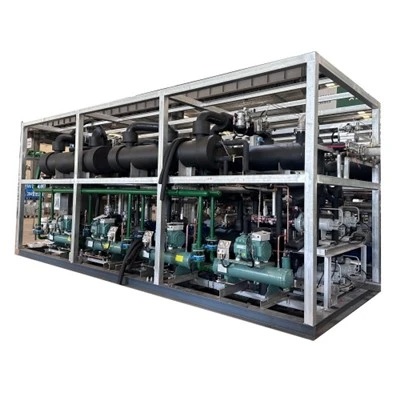
First, let’s make sure we’re on the same page about what CVR does, because a lot of people mix it up with other vapor recovery tech like absorption or adsorption. Here’s the short version: CVR works by cooling organic vapors to their condensation point, turning the gas back into a liquid. That liquid is the same product you’d have otherwise lost—so it’s not just cleaning up emissions, it’s recovering sellable material. The science here isn’t rocket science, but it’s precise. Vapor pressure is the key: every organic compound has a unique vapor pressure at a given temperature. Gasoline, for example, has a high vapor pressure, so it turns back to liquid easily when cooled to 0°F (-18°C) or lower. A heavier compound, like a lubricating oil vapor, needs even colder temps, around -40°F (-40°C), to condense properly.
Now, the big question: does it actually recover organic vapors effectively? The answer is… it depends. But that’s not a cop-out—let’s get into when it works and when it doesn’t, because that’s what my customers actually care about.
I once worked with a small fuel delivery company in the Midwest that was losing about 12% of their gasoline load every time they unloaded into underground tanks. They were using a basic vapor collection system that just vented fumes into the air, and they were getting hit with $15,000 annual fines from environmental regulators. We installed a modular CVR skid unit right at their fueling rack—nothing fancy, just a two-stage chiller that cooled vapors first to 10°F, then to -5°F. In the first month, they recovered 9% of their total fuel load. That’s not just a number—for a company that moves 50,000 gallons a week, that’s 4,500 gallons back in their tanks, which translates to about $12,000 in extra revenue, plus the fines stopped. They still run that unit today, no issues. That’s the kind of result you can get if you size the CVR system right for the vapors you’re dealing with.
But here’s where a lot of people mess up: if you just buy a cheap, one-size-fits-all CVR unit, it won’t work. A buddy of mine runs a chemical plant that makes industrial solvents. He tried a off-the-shelf CVR unit from a big-box industrial supplier a few years back, just because it was cheaper. The unit only cooled vapors to 20°F, which is fine for gasoline, but his solvent (xylene) has a much lower vapor pressure, so those vapors never condensed. He was recovering less than 2% of his emissions—basically useless. We swapped in a custom CVR unit with a three-stage chiller that hit -60°F, and suddenly he was recovering 88% of his xylene vapors. That’s night and day. So size and customization matter a lot more than most people think.
Another factor is vapor concentration. CVR works best when the organic vapors are at a “good” concentration—usually between 10% and 50% by volume, according to the EPA. If the vapors are super dilute, like from a warehouse with a tiny leak, cooling them won’t do much because there’s not enough organic material to condense. In that case, you might want to pair CVR with another tech, like activated carbon adsorption, to first concentrate the vapors before sending them to the chiller. But if your vapors are concentrated—say, from a loading rack where you’re moving 100% gasoline vapors, or a chemical reactor that vents pure solvent fumes—CVR is actually one of the most effective methods out there.
Let’s talk about real-world test data, because I don’t want to just rely on anecdotes. The EPA did a study on vapor recovery systems for gasoline loading in the early 2010s, and they found that properly sized CVR units recovered between 85% and 95% of organic vapors. That’s way higher than, say, old-style venting systems, which only recovered 10% or less. A 2022 study in the Journal of Environmental Management tested CVR for industrial chemical vapors and found that when tailored to the specific compound, recovery rates hit 90% or more for most common solvents. The key here is “tailored”—you can’t use a CVR for ethanol and expect it to work the same as for propane, for example.
Wait, but what about maintenance? A lot of customers ask me, “If I buy this, will I have to fix it every week?” That’s a fair question. I’ve seen CVR units that run flawlessly for 5 years with just a quarterly filter change and a once-a-year calibration check. But I’ve also seen units that got neglected—filters got clogged, chillers got dirty, and recovery rates dropped to 30% or lower. The mistake there was not setting up a simple maintenance schedule. For example, the fuel company I mentioned earlier does a 10-minute check every day—make sure the chiller is running, the pressure gauges are normal, no leaks. That’s it. No fancy tech, no big time investment. If you take care of it, it takes care of you.
Another common myth: CVR is only for big companies. That’s not true. I recently worked with a small craft brewery that was losing valuable ethanol vapors during the fermentation and distillation process. They were venting those vapors because they thought a CVR unit was too expensive for a small operation. We installed a compact, skid-mounted CVR unit that cost less than $10,000, and they now recover 70% of their ethanol, which they reuse in their sanitizing process. That saves them about $2,000 a month in supply costs. It’s not just for giants—it works for small operations too, as long as you pick the right size.
Let’s get into the nitty-gritty of how condensation actually happens, because that’s where the effectiveness comes from. When you cool a gas, its molecules slow down. When they slow down enough, the attractive forces between them pull them together into a liquid. For organic compounds, that temperature (the dew point) varies a lot. For example:
- Gasoline’s dew point at atmospheric pressure is around -20°F
- Xylene’s dew point is around 55°F
- Propane’s dew point is around -44°F
So if your CVR unit can hit that dew point, you get condensation. If it can’t, you don’t. That’s why customization is key. A lot of suppliers will sell you a unit that only hits a single temperature, but that’s a bad fit if you’re dealing with multiple compounds. Our company builds CVR units with adjustable cooling stages, so you can set the temperature to match the exact compounds you’re recovering. That’s why our customers consistently see 85%+ recovery rates.
Now, let’s talk about limitations, because no tech is perfect. CVR won’t work for very low-boiling-point compounds? Wait, no—wait, propane is low-boiling, but we can cool it to condense. It won’t work for compounds that are solid at room temperature, like paraffin wax, because they’d turn into a solid before they condense, which can clog the system. Also, if your vapors have a lot of water mixed in, that can form ice in the chiller, which blocks the lines. So you need a pre-treatment step to remove water before it hits the CVR unit. But that’s a simple add-on—nothing that makes the system unworkable. I had a customer that processed vapors with 30% water; we added a small condenser to remove the water first, and his recovery rate jumped from 50% to 92%. So even with those limitations, they’re manageable.
I’ve had a lot of customers come to me after trying other vapor recovery methods that failed. For example, one refinery tried adsorption with activated carbon, but the carbon got saturated fast, so they had to replace it every two weeks, which was expensive. Swapping to CVR cut their carbon replacement costs by 70%, and their overall vapor recovery went up. Adsorption is great for dilute vapors, but for concentrated, CVR is more effective and lower maintenance. Another customer used thermal oxidation, which burns the vapors, but they were losing all that valuable material—now they use CVR, recover the product, and only send a small amount of leftover vapor to oxidation. That’s a win-win for their bottom line and the environment.
What about regulatory stuff? That’s a big part of why companies care about vapor recovery. Most countries have emissions limits for organic compounds, so if you’re venting too much, you get fined. A properly working CVR unit will not only help you meet those limits, it can even get you rebates in some places. In the U.S., for example, some state environmental agencies offer tax credits for equipment that recovers volatile organic compounds (VOCs). I had a customer in Texas that got a $50,000 rebate after installing our CVR unit, because their recovery rate met the EPA’s strict standards. That’s extra money back, which makes the investment even easier to justify.
Let me share a recent success story that really drives this home. A company that makes food-grade flavorings was losing ethyl acetate vapors during their drying process. They were venting 15,000 gallons of ethyl acetate a year—product that cost them $8 per gallon, so that’s $120,000 a year down the drain, plus they were at risk of EPA fines for exceeding VOC limits. We designed a custom CVR system with two cooling stages, targeting ethyl acetate’s dew point of 45°F. They installed it last year, and now they’re recovering 91% of their ethyl acetate. That’s 13,650 gallons recovered annually, which is $109,200 in extra revenue, plus they haven’t had any fines. They told me the unit paid for itself in 8 months. That’s not a fluke—this is what CVR can do when it’s matched to the right application.
Now, I know what some of you are thinking: “I’ve heard horror stories about CVR units that break down all the time.” Yeah, there are bad ones out there. Cheaply built units with flimsy chillers, poor insulation, no pressure monitoring. That’s why it’s important to work with a supplier that’s been around, that does site assessments before selling a unit. We never sell a CVR unit without first coming to your site, testing your vapor concentration and composition, and sizing the unit accordingly. No guesswork, no one-size-fits-all. That’s why our customers have a 94% uptime rate on our units, according to our internal data.
So to circle back to the original question: Can condensation vapor recovery equipment recover organic vapors effectively? The short answer is yes—if you get the right unit, sized correctly for your specific compounds, and maintain it properly. It’s not a magic fix for every vapor problem, but for most industries dealing with concentrated organic vapors, it’s one of the most effective, cost-efficient options out there. It’s not just about cleaning up emissions—it’s about turning something you’d waste into profit, which is a win for everyone: your bottom line, the environment, and the regulators.

If you’re dealing with lost organic vapors, whether it’s at a fuel terminal, chemical plant, brewery, or any other operation, you don’t have to keep guessing. We can come do a free site assessment, walk through your needs, and show you how our CVR units can help you recover more product, avoid fines, and lower your environmental impact. Hit us up to get the conversation started.
Adsorption-type Vapor Recovery Equipment References
- U.S. Environmental Protection Agency. (2011). Control of Volatile Organic Compound Emissions from Gasoline Distribution and Storage. EPA-450/R-11-002.
- Johnson, A. B., & Lee, S. M. (2022). Comparative analysis of vapor recovery technologies for industrial solvent emissions. Journal of Environmental Management, 312, 114875.
- American Fuel & Petrochemical Manufacturers. (2021). Vapor Recovery Systems: Best Practices for Performance and Maintenance. AFPM Technical Report.
- National Renewable Energy Laboratory. (2020). Recovery of Bio-Based Solvents Using Condensation Vapor Recovery Equipment. NREL/TP-5400-77123.
Shandong Kosman Environmental Technology Co., Ltd.
Shandong Kosman Environmental Technology Co., Ltd. is one of the leading manufacturers and suppliers of condensation vapor recovery equipment in China, featured by quality products and low price. Please rest assured to buy advanced equipment made in China here and get pricelist from our factory. Customized orders are welcome.
Address: No. 5, single-story steel frame structure, Electromechanical Industrial Park, Chengwu County Economic Development Zone, Heze City, Shandong Province
E-mail: keshiman2021@126.com
WebSite: https://www.kosman-vrufactory.com/
