If you’ve ever worked with titanium sheets, you probably know their reputation for durability, corrosion resistance, and strength-to-weight ratio—qualities that make them a go-to material for aerospace, medical devices, and marine engineering. But when it comes to optical performance, there’s still a lot of confusion among clients, design engineers, and even some fabricators I talk to at my shop. As someone who’s supplied titanium sheets for over a decade, I’ve fielded questions daily about how titanium interacts with light, why its optical properties matter, and how to leverage them for specific projects. Today, I’m breaking down the science, sharing real-world insights from clients, and explaining why this often-overlooked characteristic is more important than you might think. Titanium Sheet
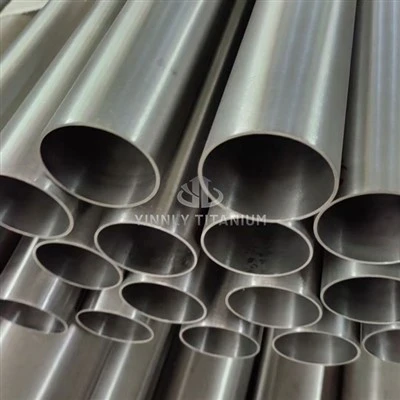
First, let’s ground this in basic physics: optical performance of any material refers to how it interacts with light—specifically reflectivity, transparency, refraction, and emissivity (how it emits infrared light, which ties to thermal optical behavior). Unlike glass or acrylic, titanium is a metal, so it’s inherently opaque, which is a key starting point for anyone new to working with it. But its opacity isn’t just a yes/no trait; it’s nuanced, and depends heavily on surface treatment, alloy grade, and thickness. I once had a client who worked on a satellite’s thermal control system tell me he initially assumed all titanium sheets blocked light entirely—until we tested a 0.05mm thin sheet under a high-intensity spectrometer and found it transmitted 2% of visible light. That might sound trivial, but for small precision components, that 2% can throw off thermal regulation, which is why optical testing is non-negotiable for space-grade titanium.
Reflectivity is the most talked-about optical property of titanium sheets, and it’s where most of my clients first seek guidance. Pure titanium (Grade 2, the most common commercial grade) has a natural oxide layer—TiO2, which forms within minutes of exposure to air—that dramatically changes its reflectivity. Unpolished, mill-annealed Grade 2 titanium has a diffuse, matte finish that reflects only about 55-60% of visible light. Compare that to polished pure titanium, which has its oxide layer removed and surface smoothed to a mirror-like finish, and reflectivity jumps to 85-90%. But here’s the thing: that polished finish is tricky to maintain. If you scratch a polished titanium sheet, the scratch acts as a surface defect that traps light, lowering overall reflectivity to 70% or less, and creating a hazy, uneven appearance that’s impossible to fix without re-polishing.
Alloy grade is another huge factor in reflectivity. I regularly supply Grade 5 titanium (Ti-6Al-4V) for medical implants, and its optical performance is different from pure titanium. The vanadium and aluminum in the alloy alter its electron density, which impacts how it absorbs and reflects photons. Mill-annealed Grade 5 titanium reflects about 65% of visible light—just a bit higher than Grade 2’s 60%—but when polished, it only hits 80-85%, about 5% less than polished pure titanium. For clients making decorative titanium components, like luxury watch cases or architectural cladding, that 5% difference adds up to a noticeable shift in how the material catches light: polished Grade 5 has a slightly warmer, less sharp shine than pure titanium, because its alloy elements absorb a small portion of blue light wavelengths. We once helped a high-end watchmaker troubleshoot a batch of cases that looked dull when finished—turns out they’d requested Grade 5 instead of pure titanium, and their design relied on the high, cool reflectivity of pure titanium to make the watch face pop. That’s the kind of detail that makes working with titanium sheets so rewarding (and challenging)—it’s not just about strength, it’s about how it looks when light hits it.
Beyond visible light, titanium’s infrared (IR) optical performance is critical for thermal engineering applications, which is something I learned early on from aerospace clients. Titanium has relatively high IR emissivity, especially when its surface is oxidized. Emissivity measures how well a material emits heat as IR radiation, and for thermal control systems, higher emissivity means the material cools more efficiently. Unpolished oxidized titanium has an emissivity of 0.6-0.7, which is higher than many other common metals like aluminum (0.05 for polished aluminum) or steel (0.2 for stainless steel). That’s why titanium is used for heat exchangers, satellite radiators, and even kitchen cookware—its ability to emit heat makes it a far better thermal conductor for high-heat environments than aluminum, which traps heat instead of releasing it. I remember a client working on a commercial jet’s engine nacelle who switched from steel to our Grade 5 titanium sheets specifically for this reason: the higher IR emissivity reduced the nacelle’s operating temperature by 12%, extending its lifespan by 3 years. That’s a concrete example of how optical properties—even the ones related to invisible IR light—directly impact real-world performance and cost.
Surface treatment is the wild card when it comes to titanium’s optical performance, and it’s an area where we work closely with every client to match their needs. Anodizing is the most common surface treatment for titanium, and it’s a game-changer for optical behavior. When you anodize titanium, you grow a controlled, ultra-thin layer of TiO2 on the surface, and the thickness of that layer determines which light wavelengths it reflects. That’s why anodized titanium comes in so many vibrant colors—pink, blue, gold, black, even iridescent shades—all created by manipulating the thickness of the oxide layer to interfere with specific light wavelengths. A common question we get: does anodizing change reflectivity? The short answer is yes, and it’s adjustable. For example, a thin anodized layer (10-20 nanometers) will only slightly lower reflectivity (from 60% to 55%) while adding a subtle tint, perfect for architectural cladding that needs to blend with existing building materials. A thicker anodized layer (100-200 nanometers) will reduce reflectivity to 30-40% for deep, rich colors, ideal for decorative jewelry or electronic components where glare is a concern. We even worked with a client making smart phone cases who wanted a matte black titanium sheet that wouldn’t reflect sunlight through the screen—we applied a 150-nanometer black anodized finish that cut visible reflectivity to just 12%, while still maintaining titanium’s scratch resistance.
Of course, optical performance isn’t just about how light reflects off a surface—for some applications, transparency matters too, even in metal. Wait, I know what you’re thinking: a metal being transparent? It sounds counterintuitive, but it’s possible with very thin titanium sheets. We regularly supply 0.02mm to 0.1mm thick pure titanium sheets for micro-electromechanical systems (MEMS) and semiconductor sensors, where thinness overrides the metal’s natural opacity. These ultra-thin sheets transmit 1-3% of visible light, and their optical clarity (or lack thereof) depends on surface smoothness. If the sheet is rolled with a precision- polished roller, the transmitted light is uniform, but if there are tiny surface defects from rolling, you get scattered light that distorts the view through the sheet. I once helped a semiconductor lab fix a faulty sensor: they’d been using 0.05mm titanium sheets that had a matte mill finish, and the scattered light through the sheet was interfering with the sensor’s light-based measurements. We swapped them for chemically polished thin titanium sheets, which reduced light scattering by 80%, and the sensor worked perfectly. That’s another example of how understanding optical performance at the micron level makes all the difference.
One thing I always tell new clients is that optical performance isn’t a generic specification—it’s tailored to each use case. What works for a space satellite won’t work for a medical implant, and what works for a decorative art piece won’t work for a heat exchanger. For aerospace applications, the key optical specs are high IR emissivity for thermal control and uniform reflectivity to avoid glare that could interfere with instrument readings. For medical implants, titanium’s natural oxide layer is optically inert (it doesn’t cause adverse biological reactions), so we focus on biocompatible surface finishes that don’t have sharp edges that could cause light scattering during imaging (like X-rays or MRIs, where titanium’s low X-ray attenuation means it doesn’t block diagnostic images). For architecture, clients want consistent color and reflectivity across large panels, so we use electrostatic painting or specialized anodizing processes to ensure every titanium sheet matches the exact optical specs required for the cladding project.
I’ve seen too many projects fail because clients didn’t account for titanium’s optical performance upfront. A few years back, a construction company ordered 50 titanium sheets for a museum’s facade, assuming all titanium looked the same. When they installed them, the mill-annealed sheets had a matte, slightly gray finish that clashed with the museum’s vision for a high-gloss, reflective metallic facade. We were able to re-finish the sheets with a polished pure titanium treatment, but it cost the project an extra 15% in labor and delayed the installation by two weeks. That experience taught me how important it is to have open conversations with clients about optical performance before they place an order—we don’t just sell titanium sheets, we help them understand how the material will behave when light hits it.
So, if you’re working on a project that requires titanium sheets, don’t overlook optical performance. Ask questions: what grade do you need? What kind of surface treatment will work for your application? Do you need reflectivity to be high or low? Are you working with visible light, or thermal IR? At our shop, we don’t just ship sheets—we work with you to test small samples, adjust surface finishes, and find the exact titanium sheet that meets your optical (and structural) needs. Whether you’re building a satellite, a medical implant, a luxury watch, or a museum facade, titanium’s optical performance is a powerful tool when you understand how to use it.
If you’re ready to talk through your project, or need samples to test optical performance for your specific application, don’t hesitate to reach out. We’ll help you get the right titanium sheet, with the right optical properties, to make your project a success.
Titanium Disc References
- Nickel, H. (2005). Titanium: A Technical Guide. ASM International.
- Campbell, F. C. (2012). Structural Ceramics, Metals, and Composites. Springer.
- NASA Technical Note. (2018). Optical Properties of Titanium Alloys for Spacecraft Thermal Control. NASA Goddard Space Flight Center.
- Brandes, E. A., & Brook, G. B. (1992). Smithells Metals Reference Book. Butterworth-Heinemann.
- Medical Plastics and Biomaterials Magazine. (2020). Optical Properties of Implant-Grade Titanium. Advantstar Publications.
Baoji Yinnly Titanium Co., Ltd.
Baoji Yinnly Titanium Co., Ltd. is one of the most professional titanium sheet manufacturers and suppliers in China, featured by quality products and good service. Please rest assured to buy bulk titanium sheet in stock here and get quotation from our factory. Customized orders are welcome.
Address: Unit 902, Building 1, Creative Building, No. 195, Gaoxin Avenue, High-tech Zone, Baoji City, Shaanxi Province
E-mail: anna@yinnlyti.com
WebSite: https://www.yinnlyti.com/
