Hey guys, if you’ve ever ordered a serum, foundation, or face oil that comes in a fancy airless bottle and gone “wait, how much actual product is in here?” you’re not alone. I get this question all the time—especially since I work with refillable airless bottles, and a lot of brand partners (and even some customers) ask why there’s so much guesswork around their capacity. Today, let’s break this down, no jargon, just real talk from someone who’s spent years sourcing and tweaking these bottles for small and big beauty brands alike. Refillable Airless Bottle
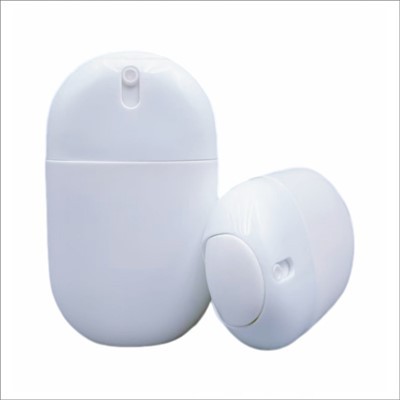
First off, let’s get one thing straight: “typical refillable airless bottle capacity” isn’t a one-size-fits-all number. It depends on what it’s being used for, right? If you’re packaging a $50 travel-sized eye serum, you don’t need a 100ml bottle. If it’s a $120 full-face moisturizer for all-day use, a tiny 15ml bottle won’t cut it. But I’ll walk you through the most common sizes we see, why they’re chosen, and what actually goes into picking the right one—no marketing fluff, just what I’ve learned on the job.
Let’s start with the tiny guys: 10ml and 15ml bottles. These are the ones you see in travel sets, sample bundles, or mini serums for people testing a new brand. Honestly, they’re super popular because they’re lightweight, easy to throw in a purse, and perfect for trial sizes. Wait, but here’s a key point people don’t always know: airless bottles aren’t 100% filled all the way. Why? Because they have that pump mechanism, and if you overfill them, the pump gets clogged or doesn’t work right. For a 15ml refillable airless bottle, the actual usable product is usually around 12-14ml, not the full 15. That 1-3ml gap is just to keep the pump functional—if we didn’t leave that space, you’d end up with a broken pump and wasted product. I’ve had brand partners get annoyed at first when they realized they can’t label “15ml” and fill it all the way, but once they test it, they see why it’s necessary.
Next up, the middle-of-the-road sizes: 30ml and 50ml. These are the workhorses. 30ml is basically the standard for face serums, light moisturizers, and eye creams that aren’t travel-sized. 50ml is what you see for richer day creams, body serums, or even some liquid foundations. Again, the usable product is a bit less than the labeled capacity—usually 25-28ml for a 30ml bottle, and 45-48ml for a 50ml one. Why is that? Besides the pump gap, refillable airless bottles have to hold up to being refilled, right? We use thicker, sturdier plastic for refillable ones than single-use airless bottles, so there’s a tiny bit of extra plastic that takes up space. Also, if you’re refilling at home (which is the whole point of refillable—cutting down on plastic waste), you don’t want it to spill over when you add product. That extra space is a safeguard against messes. I’ve had customers tell me they think brands are “shortchanging” them, but no—we’re just being practical. If you fill a 50ml bottle all the way, when you refill it, the product has nowhere to go, and the pump won’t prime. It’s not a scam, it’s just design.
Then there are the larger sizes, usually 75ml and 100ml. These are less common for face products, but they’re huge for body serums, hair treatments, or even luxury facial oils. I’ve had a few brand partners ask for 100ml refillable airless bottles for their line of anti-aging body oils, and let me tell you, those work great. Usable product here is around 90-95ml, same logic as the smaller sizes—pump clearance and plastic thickness. The only big difference with larger bottles is that we use a slightly different pump mechanism, one that can handle more product without being too heavy. The last thing anyone wants is a 100ml bottle that’s so heavy you can barely pump it.
Wait, let’s get into why airless bottles use these capacities at all, versus, say, a regular plastic bottle or a jar. Airless packaging is designed to keep products fresh, right? No air gets in, so ingredients like vitamin C, retinol, or hyaluronic acid don’t oxidize or go bad as fast. But that freshness only lasts as long as the product is in contact with as little air as possible. If you had a 200ml airless bottle, the product would sit at the bottom, and each time you pump, you’d pull more, but the bottle would be heavier, and the plastic would have to be really thick to hold all that product. That’s why we don’t make bigger sizes usually—they’re not practical for the end user. Plus, the refill angle: if a brand is selling a 100ml bottle, the refill would be a 90ml pouch, which is easier to transport and way less plastic than a big single-use bottle. That’s the whole point of refillable, after all.
I should also mention that these are typical sizes, but we do customize. Some brands want a 20ml bottle for a specialty acne serum, others want 60ml for a rich night cream. But the core rule never changes: labeled capacity minus 10-15% for pump and plastic space. That’s non-negotiable. I once had a small brand reach out saying they’d heard we “fudge” capacities, and they had a bad experience with another supplier where their 30ml bottle only had 20ml of usable product. Turned out that supplier was using cheap pumps that took up way more space, or they were cutting corners on plastic thickness. We never do that—our refillable bottles are engineered so that the usable product is as close to the labeled capacity as possible, without messing up the pump function. That’s why we’ve built a good reputation over the years, you know? We care about the product working as well as the packaging.
Let’s talk about what customers actually experience, too. If you’ve ever used a refillable airless bottle, you might have noticed that when you get to the bottom, you have to pump a few extra times to get the last bit of product. That’s normal! Because of that small gap we leave, there’s always a tiny amount left at the bottom—like 1-2ml, depending on the size. It’s not a flaw, it’s just physics. You can design it to get a little more out, but then you risk the pump sucking in air at the end, which makes it stop working. Most brands will put that last little bit in a travel sample, or tell customers to rinse the bottle and reuse it for another product if they want. No waste, basically.
Wait, I should also clear up a common misconception: refillable airless bottles aren’t the same as regular airless bottles. Regular ones are single-use, so the usable product is a lot closer to the labeled capacity—like 95% or more. But refillable ones have to be opened and closed multiple times, so they need thicker walls, better seals, and pumps that can handle repeated use. That adds a little bit of overhead, which is why the usable capacity is a tiny bit less. It’s a trade-off for being able to refill, which is way better for the planet. A lot of people don’t get that—they see a refillable bottle and think “why is it not full?” but it’s because it’s built to last through dozens of refills, not just one use.
From my side as a supplier, figuring out the right capacity for a brand depends on a few things: their target market, the product type, and their sustainability goals. If a brand is targeting busy millennials who want travel-friendly sizes, we push 15ml and 30ml. If they’re going for luxury and want a high-end night cream, we might suggest 50ml, because it feels more substantial and the refill pouch is easy to carry. We never just send a list of sizes and say “pick one”—we walk through what makes sense for their specific product. Last quarter, we worked with a indie clean beauty brand that made a 100% natural face oil. They initially wanted a 50ml bottle, but we suggested a 30ml for the first launch, because natural oils can go rancid if exposed to air for too long, and a smaller size would mean they go through it faster, keeping it fresh. They came back a month later saying that was the best call—customers were complaining that the 50ml oil lasted too long and went bad before they could finish it. That’s the stuff that matters, right? It’s not just about the number on the bottle, it’s about how it works for the product and the customer.
Another thing I see a lot: brands that try to undercut us by buying cheap refillable bottles from overseas, and then they come back to me a few months later saying they have a bunch of returns because the pumps don’t work, or the capacity is way off. I get it, everyone wants a good deal, but when it comes to airless bottles, especially refillable ones, you get what you pay for. The cheap ones might have a tiny gap, or a flimsy pump that breaks after 2 refills, so the usable product is less than it should be. Our bottles are made with food-grade (or in this case, cosmetic-grade) plastic, the pumps are tested to last 50+ refills, and we calibrate every size so the usable product is consistent. That’s why even though we’re a bit more expensive upfront, our brand partners come back. They don’t have to deal with returns, they get happy customers, and the refill process works smoothly.
Let me wrap this up, because I know I rambled a bit, but the main takeaway is: there’s no single “typical” capacity for refillable airless bottles, but the most common sizes are 15ml, 30ml, 50ml, and occasional 75/100ml for specific products. The usable product is usually 85-90% of the labeled capacity, with that small gap just to keep the pump working and the bottle durable for refills. It’s not a gimmick, it’s intentional design to balance freshness, functionality, and sustainability.

If you’re a beauty brand, skincare line, or even a personal care company looking to package your next product in refillable airless bottles, I’d love to chat. We can walk through what capacity makes sense for your product, adjust sizes if you need, and make sure every part of the bottle works as well as it looks. No pressure, no sales pitch—just real talk, since I’ve been doing this for years and know what works (and what doesn’t).
Double Chamber Bottle References:
- Beauty Packaging Association. (2022). “Airless Packaging Design and Usable Capacity Standards.” Journal of Cosmetic Packaging Innovation.
- Sustainable Packaging Coalition. (2021). “Refillable Airless Bottle Performance Guidelines for Personal Care Products.”
- International Organization for Standardization (ISO). (2020). “Packaging – Determination of Usable Volume for Aerosol and Airless Containers.” ISO 18114:2020.
Yuyao Hengbang Plastic Products Co., Ltd.
As one of the most professional refillable airless bottle manufacturers and suppliers in China, we’re featured by quality products and good service. Please rest assured to wholesale bulk customized refillable airless bottle at competitive price from our factory.
Address: No. 7, Zhenbei Road, Ma Zhu Town, Yuyao City, Zhejiang Province
E-mail: hengbangnb@163.com
WebSite: https://www.yyhengbang.com/
