If you’ve ever driven through a city skyline dotted with rust-red bridges, weather-resistant urban sculptures, or industrial cladding that looks as rugged and intentional as the buildings it wraps, you’ve likely encountered EN Corten Steel. As a supplier of this specialized material, I get asked all the time: “How does temperature really affect it?” It’s a question that goes far beyond surface-level rust, because EN Corten Steel’s entire value—its durability, low maintenance, distinct aesthetic—depends on how it interacts with heat, cold, and everything in between. Over 12 years of working with fabricators, architects, and construction teams across North America, I’ve seen firsthand how mismanaging temperature-related impacts on Corten can lead to avoidable issues, and how working with the material’s natural tendencies (instead of against them) makes all the difference. Let’s break this down simply, based on real-world projects and material science that I’ve leaned on for every load I ship. EN Corten Steel
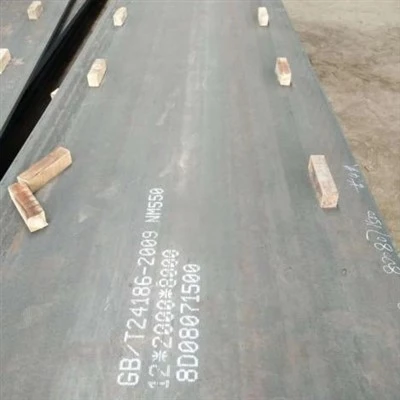
First, a quick refresher for anyone new to EN Corten Steel: it’s not just any rust-prone steel. Unlike regular carbon steel, which corrodes uniformly and flakes away thin layers over time, EN Corten is alloyed with small amounts of copper, chromium, nickel, and phosphorus—key elements that make its corrosion pattern unique. When exposed to the elements, it forms a tight, stable patina, or rust layer, that locks out oxygen and moisture, stopping further deep corrosion. That’s the whole point of EN Corten: it needs no paint, no regular recoating, and that rich, earthy patina gets better with age. But that patina only works if it forms correctly, and temperature fluctuations are one of the biggest factors in how that patina develops—and holds up over years of use.
Let’s start with temperature extremes, because that’s where most of the confusion starts. Take hot climates, for example. I recently shipped a 4,000-square-foot cladding order for a mixed-use development in Phoenix, Arizona. The architect initially worried that 110°F summer days would speed up corrosion and make the patina flake off. What I explained, and what we saw on that project two years later, is that moderate heat actually helps Corten’s patina form faster. The warm temperatures accelerate the chemical reactions between the steel’s alloy elements and atmospheric moisture and oxygen, so the stable, protective patina can form in 12 to 18 months, instead of the 2 to 3 years it takes in cooler, drier regions. But here’s the catch: extreme, rapid temperature swings paired with high humidity can cause problems. Phoenix doesn’t get as much sudden cold snap moisture as, say, Chicago, but when a rare winter storm drops temperatures 50 degrees in 24 hours, the expansion and contraction of the steel can put tiny stress cracks in the still-forming patina. Those cracks are usually superficial, but if they’re deep enough, they let moisture seep in underneath, leading to small areas of deeper corrosion. On that Phoenix project, we mitigated this by adding small, intentional gaps between panels to allow for thermal expansion—simple adjustments that prevented any major issues.
Now contrast that with cold climates, where temperatures drop below freezing for months on end, often paired with high moisture from snow, ice, and salt used for roads and sidewalks. I supplied Corten for a pedestrian bridge in Minneapolis, Minnesota, a project that taught me a lot about how cold impacts EN Corten Steel. The big concern here is freeze-thaw cycles: when water gets into tiny gaps in the patina, freezes, expands by about 9%, and then thaws. Over repeated cycles, that expansion and contraction can degrade the patina. But here’s the thing that many people don’t know: properly formed Corten patina is actually more resistant to freeze-thaw damage than regular paint. That Minneapolis bridge has been up for 8 years, and the only areas with minor wear are the sections closest to the salted sidewalks, where the salt slowed patina formation in the first place. Salt is a bigger enemy in cold climates than temperature itself, but temperature amplifies that. When temperatures hover right around freezing, freeze-thaw cycles happen daily, instead of a few times a season, and that’s when patina integrity can suffer. The fix here? Making sure the steel is fully exposed to air during the initial patination phase (often called “weathering in”) so it forms a continuous layer before being installed, and avoiding applying Corten in areas that will be constantly covered by snow or standing water year-round.
Temperature changes also impact the structural properties of EN Corten Steel, which is something fabricators don’t always think about when they’re planning a project. Regular carbon steel expands when heated and contracts when cooled, and EN Corten Steel behaves almost identically in this regard—there’s no special alloy trick to change its thermal expansion coefficient, which is roughly 12 x 10^-6 per °C, almost the same as common structural steel. That means when you’re working on large-scale projects, like bridge decks or building facades that span hundreds of feet, you have to account for thermal movement. For example, a 100-foot length of Corten steel will expand about 0.7 inches when heated from 30°F (a typical winter low) to 90°F (a mild summer high). If you don’t leave room for that movement—say, by welding panels too tight without expansion joints—you’ll end up with buckling, warping, or even structural stress that can damage the patina and the steel itself. I’ve had fabricators call me panicking because their Corten facade started warping a year after installation, and 9 times out of 10, it’s because they didn’t plan for thermal movement. The good news is this is a simple, solvable issue with basic engineering, and it’s one that I always include in my project consultations—for every order I ship, I send a free guide to thermal expansion for Corten installations, because I’d rather avoid a headache for my customers than deal with a return.
Another area where temperature plays a role is in welding and fabrication. EN Corten Steel is designed to be welded, but high heat from welding can mess with the alloy balance in the heat-affected zone (HAZ)—the area of steel next to the weld that’s heated but not melted. The HAZ is supposed to form a normal patina just like the rest of the steel, but if the temperature during welding is too high, or if you use the wrong filler metal, the HAZ can corrode faster than the base steel, leading to an uneven, patchy patina that looks unattractive and can be less durable. I see this mistake a lot with small, local fabricators who don’t have experience with Corten, vs. larger teams that work with it every day. The fix is straightforward: use low-heat welding techniques, like MIG welding with a matching Corten filler wire, and keep the heat input as low as possible. When done right, the HAZ will patina evenly with the rest of the steel, no one will be able to tell where the welds are. Last year, I worked with a small metal shop in Ohio that had done a custom Corten fire pit and told me the weld lines were showing after a month. We went back, ground the welds smooth, re-patinated the HAZ with a mild chemical solution, and now that fire pit looks as good as any large-scale commercial one. Temperature during welding is non-negotiable for even patina formation.
Wait, what about high heat applications, like Corten used for fire pits or outdoor grills? That’s a question I get all the time, and it ties right back to temperature. EN Corten is not heat-treated for high-heat environments, so prolonged exposure to temperatures over 500°F can change its alloy structure and break down the protective patina. I learned this the hard way a few years back when a customer ordered 10 custom Corten fire pits for a resort in Colorado and complained that the inside of the pits were corroding badly after one season. It turned out the resort was burning hot coals in the pits, which got up to 1,200°F, way above Corten’s recommended limit. The fix here was simple: line the fire pit with a thin layer of stainless steel, or use regular carbon steel for the interior and Corten for the exterior where the patina is visible. Corten works great for outdoor structures that get occasional heat exposure, but not for places that will see constant, high heat. That’s a rule I always share with customers—no guesswork, just real-world lessons from projects gone right and wrong.
Now, let’s talk about long-term performance, because that’s what matters most for anyone investing in Corten. I have a 15-year-old Corten planter on my own patio, and after living in Kansas City, where we get 100°F summers, -10°F winters, and plenty of rain, that planter looks almost exactly like the day I bought it, minus the natural patina deepening. The patina on it is about 100 microns thick, which is the perfect thickness—thick enough to protect the steel, thin enough to keep the material’s strength intact. Temperature plays a big role in that patina’s long-term health. In areas with consistent, mild temperatures (like the Pacific Northwest, where it rains almost every day but rarely gets above 80 or below 30), the patina develops slowly, but it’s very stable, lasting 50+ years with minimal maintenance. In places with more extreme temperature swings, the patina might develop faster, but it’s important to monitor for any flaking or cracking in the first 2 years after installation. If you catch it early, you can lightly sand the affected area and re-patinize it, instead of having to replace a whole panel.
A common myth I hear is that temperature changes cause Corten to lose its structural strength. That’s not true— at least not within normal use. EN Corten Steel has a yield strength of about 345 MPa, similar to Grade A36 structural steel, and temperature changes within the range of -50°F to 120°F don’t reduce that strength. The only time temperature affects structural integrity is in the high-heat applications I mentioned earlier, or during extreme fire events, which no material is designed to handle forever. For most construction and architectural uses, temperature fluctuations are just part of the design process, not a structural risk.
So, what does all this mean if you’re considering using EN Corten Steel for your next project? The key takeaway is that temperature changes are not an enemy—they’re a factor to plan for, just like wind load or material cost. The most successful Corten projects I’ve shipped are the ones where the architect and fabricator talk about temperature-related considerations early on, not as an afterthought. If you’re in a hot climate, plan for thermal expansion joints and make sure the steel gets enough air flow while it patinas. If you’re in a cold climate, prioritize proper weathering in before installation, and avoid placing panels where they’ll sit under snow or standing water for months. If you’re working on a project with high heat exposure, pair Corten with a heat-resistant material for the interior.
As a Corten supplier, my job isn’t just to cut steel to the right size and ship it. It’s to pass on the lessons I’ve learned from 12 years in the business, so my customers don’t have to repeat the same mistakes I did. I’ve seen Corten turn blank walls and open spaces into iconic, timeless features, and I’ve also seen customers end up with a subpar product because they didn’t account for temperature. The good news is that with a little planning, EN Corten Steel’s natural performance and distinct aesthetic can last for decades, no matter what the weather or temperature throws at it.

If you’re ready to bring Corten to your next project, whether it’s a small garden feature, a large bridge, or a commercial facade, I’d love to walk you through the details—talk through climate-specific considerations, share past project references, and make sure you get the right material for your needs. Don’t hesitate to reach out to discuss your requirements.
ASTM/ASME HSLA Steel Plate References
- ASM International. (2005). Corten Steel: Properties, Processing, and Applications. Materials Park, OH: ASM International.
- The Steel Construction Institute. (2018). Design Guidance for Weathering Steel Structures. Ascot, UK: Steel Construction Institute.
- British Standards Institution. (2020). BS EN 10025-5: Hot-Rolled Products of Structural Steels, Part 5: Technical Delivery Conditions for Weathering Steel Grades. London, UK: BSI.
- Feliu, S., & Feliu, V. (2007). The atmospheric corrosion of weathering steels. Corrosion Science, 49(1), 2-20.
Gnee Steel (Tianjin) Co., Ltd.
As one of the most professional en corten steel manufacturers and suppliers in China, we also support customized service with low price. We warmly welcome you to buy high quality en corten steel in stock here from our factory. If you have any enquiry about free sample, please feel free to email us.
Address: No.4-1114, Beichen Building, Beicang Town, Beichen District, Tianjin, China
E-mail: alloy@gneesteelgroup.com
WebSite: https://www.chinavesselplates.com/
