Hey there! As a supplier of 3 Phase Decanter Centrifuges, I often get asked about the differences between single – stage and multi – stage models. So, I thought I’d write this blog to break it down for you in a simple way. 3 Phase Decanter Centrifuge
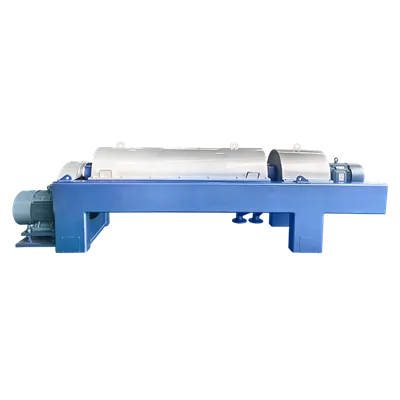
Let’s start with the basics. A 3 Phase Decanter Centrifuge is a pretty nifty piece of equipment. It’s used to separate three different phases – usually a solid phase and two liquid phases with different densities – from a mixture. This separation process is crucial in a bunch of industries, like wastewater treatment, food processing, and oil and gas.
Single – Stage 3 Phase Decanter Centrifuges
A single – stage 3 Phase Decanter Centrifuge is, well, just what it sounds like. It does the separation job in one go. It has a single set of components that work together to separate the three phases.
The way it works is quite straightforward. The mixture is fed into the centrifuge, and then it spins really fast. Thanks to the centrifugal force, the different phases start to separate based on their densities. The solids get pushed towards the outer wall of the centrifuge bowl, and then there are mechanisms to remove the separated solids, light liquid, and heavy liquid.
One of the biggest advantages of a single – stage centrifuge is its simplicity. It’s easier to operate and maintain. You don’t have to deal with a bunch of complex systems or multiple stages of separation. This means that if you’re on a tight budget or you have a relatively simple separation task, a single – stage centrifuge could be a great option.
For example, in some small – scale food processing plants, they might just need to separate a bit of solid waste from two types of liquid products. A single – stage centrifuge can handle this job efficiently without costing a fortune.
However, single – stage centrifuges do have their limitations. They might not be as effective when it comes to separating very fine solids or when dealing with mixtures that have very close – density liquids. The separation might not be as precise, and you could end up with a bit of cross – contamination between the phases. Also, if you need a really high – volume separation, single – stage centrifuges might struggle to keep up.
Multi – Stage 3 Phase Decanter Centrifuges
Multi – stage 3 Phase Decanter Centrifuges, on the other hand, do the separation in multiple steps. They have more than one set of separation components, and each stage refines the separation process.
The first stage starts the basic separation of the three phases. Then, the partially separated phases are sent to the next stage, where the separation gets even more precise. This multi – step process allows for a much higher level of separation efficiency.
One of the main benefits of multi – stage centrifuges is their ability to handle more complex separation tasks. They can separate very fine solids and liquids with very similar densities. In the oil and gas industry, for instance, they’re often used to separate oil, water, and fine sediment from drilling mud. The multi – stage process ensures that the oil is as pure as possible, which is super important for further processing.
Another advantage is their high – volume processing capability. They can handle large amounts of the mixture at once, making them ideal for big industrial operations. If you have a large – scale wastewater treatment plant, a multi – stage centrifuge can process the wastewater much faster and more effectively than a single – stage one.
But, of course, there are downsides too. Multi – stage centrifuges are more complex and expensive. They require more advanced operation and maintenance skills. You need to have trained staff to operate them properly, and the maintenance costs can be higher because there are more components that can break down.
Comparing the Two
When it comes to separation efficiency, multi – stage centrifuges clearly take the lead. They can achieve a much higher degree of separation, which is crucial for industries where product purity is key. If you’re in an industry where a small amount of contamination can affect the quality of your final product, a multi – stage centrifuge is probably the way to go.
In terms of cost, single – stage centrifuges are more budget – friendly. They’re cheaper to buy, and the operating and maintenance costs are usually lower. So, if you’re just starting out or you have a small – scale operation, a single – stage centrifuge can be a cost – effective choice.
As for the speed of processing, multi – stage centrifuges can handle larger volumes in a shorter time. They’re designed for high – throughput operations, so if you have a lot of material that needs to be separated quickly, they’re the better option.
The complexity of operation and maintenance is also a major factor. Single – stage centrifuges are much simpler to use and take care of. You don’t need to be an expert to operate them, and basic maintenance can often be done in – house. Multi – stage centrifuges, on the other hand, need more specialized skills and knowledge.
Making the Right Choice
Deciding between a single – stage and a multi – stage 3 Phase Decanter Centrifuge depends on your specific needs. If you have a simple separation task, a limited budget, and don’t require extremely high – precision separation, a single – stage centrifuge will do the job. You can get reliable separation without breaking the bank.
But if you’re dealing with complex mixtures, need high – purity separation, or have a large – volume processing requirement, a multi – stage centrifuge is worth the investment. It might cost more upfront, but the long – term benefits in terms of product quality and processing speed can make it a smart choice.
At our company, we’re here to help you make the right decision. We’ve got a range of single – stage and multi – stage 3 Phase Decanter Centrifuges, and our team of experts can provide you with all the information you need. Whether you’re a small – scale business or a large industrial player, we’ve got a solution that will fit your needs.
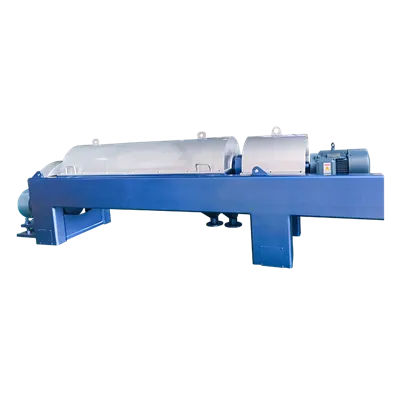
If you’re interested in learning more about our 3 Phase Decanter Centrifuges or you want to discuss your specific requirements, don’t hesitate to reach out. We’re happy to have a chat and see how we can help you with your separation needs.
References
2 Phase Decanter Centrifuge Geankoplis, C. J. (1993). Transport Processes and Unit Operations. Prentice – Hall.
Perry, R. H., & Green, D. W. (1997). Perry’s Chemical Engineers’ Handbook. McGraw – Hill.
Schweitzer, P. A. (1997). Handbook of Separation Techniques for Chemical Engineers. McGraw – Hill.
Lishui Yuanrong Environmental Protection Equipment Co., Ltd.
As one of the most professional 3 phase decanter centrifuge manufacturers and suppliers in China, we have world-leading production equipment and strong manufacturing capabilities. Please feel free to buy customized 3 phase decanter centrifuge from our factory. Also, quotation is available.
Address: Lot 6-1, Block 15, Wanyang Zongchuang City, Lishui, Zhejiang, China
E-mail: 361184920@qq.com
WebSite: https://www.yrhdc.com/
