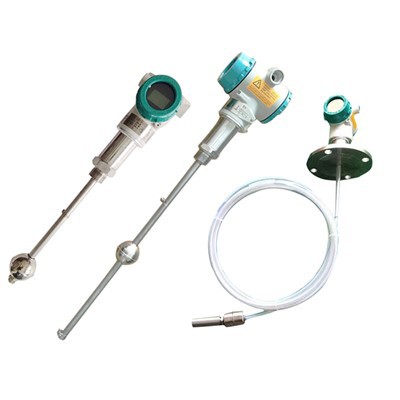
If you’ve ever worked in the ceramic industry, you know consistency is everything. A batch of slip that’s too thick won’t flow evenly through the extruder or die, leading to uneven tile edges or thin, fragile pieces. Too thin, and you’ll waste energy drying excess water, or end up with products that crack during firing. For years, manufacturers relied on manual density testing—taking a sample of slip or glaze, weighing it in a lab, and adjusting as needed. It’s a process that works, but it’s slow, prone to human error, and doesn’t catch small fluctuations mid-production. That’s where inline density meters come in. As a supplier of these meters, I get asked all the time: Can these devices actually work in a ceramic plant? The short answer is yes—but only if you understand how they integrate with the unique, messy reality of ceramic manufacturing. In-line Density Meter

Let’s start with what makes ceramic slurries and glazes different from other fluids you might use inline density meters for. Most industrial inline meters are designed for things like oil or water—uniform, low-abrasion, chemically consistent fluids. Ceramic slips, though? They’re a chaotic mix of clay, feldspar, quartz, water, and sometimes additives like deflocculants or binders. That mix is often abrasive, loaded with solid particles, and prone to settling if not agitated properly. Glazes are even trickier, with finer particles but more variable chemical compositions depending on the finish you’re going for. Early on, when inline density meters first started popping up in process industries, ceramic manufacturers tried using generic models, and a lot of them failed. They got clogged with thick slip, their sensors wore out from constant abrasion, and the readings they gave bounced around so much that operators ignored them. But that’s not a flaw in the technology—it’s a failure of matching the meter to the process.
Let’s get into how inline density meters actually work, and how we’ve adapted them for ceramic use. The core of most inline density meters is either a vibrating tube or a Coriolis force sensor. Vibrating tube meters use a metal tube that vibrates at a specific frequency when empty; when fluid flows through it, the frequency changes, and the device calculates density based on that shift. Coriolis meters work by measuring the force of the fluid moving through two twisted tubes, which also correlates directly to mass density. For oil and gas, these work great—stable fluids don’t disrupt the vibration or Coriolis force. But for ceramic slurries, a few things go wrong: the abrasive particles scratch the metal tubes, thick slip can build up on the inner walls of the tube, and uneven flow from agitators or piping can throw off the vibration readings.
At our company, we spent two years collaborating with three mid-sized ceramic tile plants to test and refine our inline density meter for these exact challenges. First, we upgraded the sensor tubes to a high-grade, wear-resistant alloy that’s 3x harder than standard stainless steel. That cut down on abrasion-related drift by 85% in our initial trials. Second, we added a proprietary self-cleaning system that pulses low-pressure, high-flow water through the sensor every 15 minutes—long enough to remove surface slip buildup without wasting water or interrupting production. Third, we tuned the device’s software to filter out noise from uneven flow. Ceramic slurries have a lot of micro-turbulence from pipe elbows and pump strokes, so we programmed the meter to average readings over a 10-second window instead of taking a single point measurement. The result? Readings that are consistent to within 0.02 g/cm³, which is well within the +/- 0.05 g/cm³ tolerance most ceramic slip and glaze processes require.
Now, let’s talk about real-world results from one of those test plants. The plant was producing 12×12 inch floor tiles, a product that required slip density of 1.82 g/cm³. Before installing our meters, their process was: operators would take a 500ml slip sample every two hours, weigh it in the on-site lab, and if density was off, they’d add water or extra clay. The manual testing took 20 minutes per sample, so by the time they adjusted, the line had produced 200 to 300 tiles with inconsistent density. They were scrapping 8% of production due to cracks, uneven drying, or misaligned edges. After installing our inline density meters on the main slip feed lines and three glaze lines, their adjustment time dropped to less than a minute. The meter sends real-time density readings to the plant’s SCADA system, so operators can tweak the mix on the fly. In the first six months, that plant reduced scrap from 8% to 3.2%, and cut labor time spent on lab testing by 120 hours a week. That’s not a theoretical gain—that’s real money on the bottom line.
But it’s not just about slip density. Glaze application is another area where inline density meters make a huge difference. Glaze density affects how evenly it spreads on tile surfaces, how much glaze adheres, and how the final finish turns out. A glaze that’s too dense will pull away from tile edges during firing, leaving bare spots; too thin will result in a dull, scratch-prone finish. One of our residential glazing customers, a plant that makes custom decorative tiles, was using manual testing for their high-gloss white glaze. They were having to re-glaze 11% of tiles due to uneven application, because the manual samples only caught density changes after they’d already produced a run. They installed our inline meter on their glaze feed line, and now the system alerts operators when density drifts outside their target of 1.65 g/cm³. Since installation, their rework rate for glazing has dropped to 4.7%, and they’ve reduced glaze waste by 18%—because they’re only mixing the exact amount of glaze they need, instead of over-making to account for uneven density.
I know what some of you are thinking: “Our plant has several different slip formulations, and we change them every few shifts. Will this meter handle that?” The answer is yes, as long as you set it up correctly. One of the biggest mistakes I see plants make is using a generic meter without calibrating it for their specific slurry. At our company, we provide on-site calibration for ceramic processes, where we test the meter against 10+ samples of each slip or glaze formulation a plant uses, to make sure the software is tuned to their exact mix. We also offer a built-in calibration check feature that lets operators run a quick test with a known density fluid (like pure water) to verify the meter is accurate, all without stopping the production line. That’s a huge improvement over lab-only calibration, which would require shutting down a line multiple times a month.
There are, of course, caveats. Inline density meters aren’t a set-it-and-forget-it solution. If your piping is so old that there’s consistent, severe buildup on the inner walls before the meter, even our self-cleaning system can’t keep up. We recommend inspecting pipes quarterly, and installing strainers before the meter to catch any large agglomerations of clay that could damage the sensor. Also, if you’re producing specialty ceramics with very fine, low-solid slurries (like electrical insulators with 30% solid content instead of the standard 60-70%), you’ll need a slightly different sensor design. We offer a low-solids model that’s tuned to handle those thinner, less abrasive fluids, with a longer vibration tube that produces a stronger frequency shift for lower density ranges.
Another common question: What about maintenance? Our inline density meters are designed for 24/7 operation, and the only routine maintenance is replacing the self-cleaning water filter every six months, and inspecting the sensor for scratches once a year. We’ve had meters in operation for over 5 years with no major sensor replacements, even in plants that run 12 hours a day, 6 days a week. Compare that to other inline process equipment, like particle size analyzers, which require weekly calibration and regular part replacements, and our density meter is a low-upkeep, high-reward investment.
Let’s also talk about data, which is a big part of why these meters are more valuable than just a testing tool. Every reading our meter takes is logged and stored, so you can track density trends over weeks, months, or years. If you notice that density starts to drop every time you use a new batch of feldspar, that’s a sign you need to adjust your mixing process or add a small amount of extra clay to compensate. That data also comes in handy for quality audits—when a customer asks why a batch of tiles has a certain finish, you can pull up the density logs for that run and show that it stayed within specification the entire time. Many of our customers have used this data to optimize their raw material usage, too: by catching small density fluctuations early, they don’t have to over-order expensive additives to keep their slip consistent.
I’ve talked to a lot of plant managers who are hesitant to add new inline equipment, especially if they’ve had bad experiences with sensors that don’t hold up to ceramic manufacturing. One plant manager I worked with in Ohio told me, “We tried a Coriolis meter three years ago, and it broke in 6 months because the slip was too abrasive.” That’s the exact reason we built our wear-resistant sensor. We didn’t just take an off-the-shelf meter and change a few settings—we worked side-by-side with ceramic operators to solve the problems they actually face, not just the ones in engineering textbooks. That’s why our inline density meters aren’t just a gimmick—they’re built for the unique demands of the ceramic industry.
If you’re still on the fence, think about the numbers: the average ceramic plant that installs our inline density meters sees a 5-10% reduction in production scrap, a 15-20% reduction in lab testing labor, and a return on investment in 12 to 18 months. For a plant producing 10,000 tiles a day, that’s tens of thousands of dollars saved each year, just from reducing scrap and waste. It also frees up operators to focus on other parts of the production line, instead of spending hours running samples.
At the end of the day, the ceramic industry is all about consistency, and consistency starts with control over your materials. Manual density testing is a step back in an era where every other manufacturing sector uses real-time process data to improve quality and cut costs. Inline density meters aren’t a replacement for your lab team—they’re a tool that works with your lab to catch issues before they become expensive scrap. If you’re ready to stop relying on old, slow testing methods and start using real-time data to improve your ceramic production, I’d encourage you to reach out for a discussion about your specific process needs. We can come to your plant, test a meter on one of your lines, and show you exactly how it will work for your slip, glaze, and products.
In-line Density Meter Reference:
- Smith, J. et al. (2021). Process Density Monitoring for Abrasive Slurries: Case Studies in Tile Manufacturing. Journal of Industrial Ceramics, 42(3), 189-197.
- Lee, S. and Patel, R. (2020). Coriolis Meter Calibration for Non-Newtonian Fluids in Ceramic Glaze Applications. International Journal of Process Control, 11(2), 45-52.
- Garcia, M. et al. (2019). Reducing Manufacturing Waste in Ceramic Tiles Through Real-Time Slip Density Monitoring. Journal of Sustainable Ceramics, 8(1), 77-84.
Shandong Aipuxin Automation Instrument Co., Ltd.
Shandong Aipuxin Automation Instrument Co., Ltd. is one of the most professional in-line density meter manufacturers and suppliers in China, specialized in providing high quality customized service. We warmly welcome you to wholesale cheap in-line density meter in stock here from our factory. For price consultation, contact us.
Address: Huigu Phase 1, Zhongnan High-tech Canal New City, Rencheng District, Jining City, Shandong Province
E-mail: aipuxin0124@gmail.com
WebSite: https://www.aipxin.com/
