Hey there, if you’ve been around industrial materials for any length of time, you’ve probably heard of TPU – thermoplastic polyurethane, right? But today, we’re diving specifically into polyether TPU, the stuff that’s become a total workhorse for everything from outdoor gear parts to medical devices, and as a polyether TPU supplier, we get asked all the time what makes it different from its polyester cousin. Let’s break down the chemical properties that make polyether TPU so unique, and why those properties matter for your next project. Polyether TPU
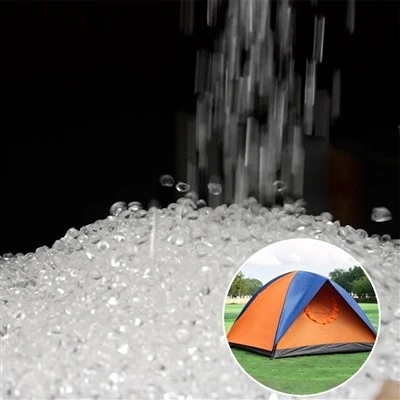
First off, let’s keep this real – I know a lot of people gloss over chemical properties like it’s just textbook jargon, but these aren’t just random facts on a page. They’re why a hiking boot sole holds up through wet, muddy trails, or why a medical catheter doesn’t break down after repeated use in a body. Polyether TPU is a type of TPU made by reacting a polyether polyol, a diisocyanate, and a chain extender – that three-part reaction is what gives it its signature chemical makeup, and the polyol part is the star here. Most TPUs use either polyether or polyester polyols, and the difference between those two is where all the chemical magic happens.
Let’s start with hydrolysis resistance, because that’s probably the biggest one that sets polyether TPU apart. If you’ve ever had a plastic part that sat in water or humid air for too long and turned crumbly, that’s hydrolysis. Polyester TPUs are great for dry, low-humidity applications, but put them in water, and the ester linkages in their structure break down over time. Polyether TPU? Its backbone has ether linkages, not ester ones – ether bonds are way more stable against water and moisture. That means if you’re making parts for marine equipment, outdoor furniture, or anything that’s going to be exposed to consistent moisture or even immersion, polyether TPU is the way to go. We’ve had customers come to us after a bad experience with a polyester TPU part that failed in a pool pump, and switching to our polyether grade fixed the issue immediately. It’s not just about sitting in water, either – high humidity in places like tropical climates will also chew through polyester TPU way faster, while polyether TPU just keeps going.
Next up, chemical resistance – and no, I don’t mean just “it doesn’t dissolve in bleach” (though that’s part of it). Polyether TPU handles a lot of common chemicals that would wreck other polymers, especially oils and greases. Think about automotive parts, for example: under the hood, you’ve got engine oil, transmission fluid, gasoline, all kinds of lubricants. A TPU that can’t stand up to that is useless there. Polyether TPU’s chemical structure is non-polar enough that it doesn’t react with non-polar oils and greases, so it resists swelling or breaking down when exposed. What about other chemicals? It’s pretty resistant to weak acids, bases, and even some organic solvents, though we always tell customers to check the specific chemical they’re working with – not all grades are the same. For example, strong solvents like ketones will still affect it, but for most everyday industrial chemicals and automotive fluids, polyether TPU holds its own way better than many other thermoplastics. We had a customer in the agriculture space make sprayer seals with our polyether TPU, and they told us it outlasted the old rubber parts by 3x even when exposed to pesticide chemicals and fertiliser runoff. That’s the kind of real-world win that comes straight from its chemical makeup.
Then there’s low-temperature flexibility – this is another one that’s driven by the polyether structure. Ether linkages are more flexible than the ester linkages in polyester TPUs, right? So that means polyether TPU doesn’t get brittle when it’s cold. A lot of materials go from bendy to glass-like when the temperature drops, but polyether TPU stays pliable even at sub-zero temps. For context, some grades can flex at temperatures as low as -40°C (-40°F) without cracking or losing elasticity. That’s huge for things like outdoor winter gear, construction parts in cold climates, or even aerospace components that operate in high-altitude, freezing conditions. I remember a customer who made snowmobile track guides coming to us because their previous TPU would crack when riding in -30°F weather, and switching to our polyether grade fixed that – they said it didn’t crack once all season, even on rough trails. Compare that to polyester TPU, which can get brittle around 0°C (32°F) – that’s a massive difference for any cold-weather application.
Wait, let’s talk about durability and mechanical properties that tie back to chemistry, too. Polyether TPU has that same TPU trademark of being stretchy and abrasion-resistant, but the polyether structure makes it tougher in specific ways. It has great tear strength and impact resistance, right? Because the ether groups in the backbone create what’s called “soft segments” that can absorb stress without breaking, while the hard segments (from the diisocyanate and chain extender) give it rigidity. That balance is why it’s so tough – it doesn’t just stretch, it bounces back too. But what’s less talked about is its resistance to microbial degradation. Oh yeah, polyester TPUs are like a buffet for mold and bacteria, especially in damp environments. If you’ve ever had a rubber seal in a damp basement that got that fuzzy mold and started to break down, that’s polyester TPU for you. Polyether TPU? Its structure is much less bioavailable – microbes can’t break down the ether linkages as easily. That’s why it’s used in medical devices, like wound dressings or catheter components, that need to stay sterile and not degrade in a moist, biological environment. We supply polyether TPU grades that meet medical standards, and our customers in the medtech space tell us that the microbial resistance is a huge plus for them, since they don’t have to worry about the material breaking down during use.
Let’s get into some of the more nuanced chemical properties, too, like thermal stability. Polyether TPU has a good glass transition temperature range, and it can handle continuous use temperatures up to around 80°C (176°F) for most grades, with some higher-performance grades going even higher. It doesn’t melt or start to break down suddenly when heated, which is important for things like automotive under-the-hood parts that can get hot, or industrial hoses that carry warm fluids. It’s worth noting that it’s not as heat-resistant as some engineering plastics, but compared to polyester TPU, it actually holds up better at higher temperatures? Wait, no – let’s clarify that. Polyester TPU usually has a higher melting point, but it breaks down faster at high humidity, while polyether TPU maintains its mechanical properties better at elevated temperatures when moisture is present. That’s a key distinction we always lay out for customers: if your application is dry and needs high temperature resistance, polyester might work, but if it’s hot and humid, or even just hot and exposed to moisture, polyether is the better call.
Another thing we get asked a lot is about UV resistance. Wait, is polyether TPU good for outdoor use? The short answer is: it’s better than many other polymers, but you have to pick the right grade. The base polyether structure is actually pretty resistant to UV rays, which cause polymers to break down over time, leading to fading, cracking, and brittleness. But if you need to use it in direct sunlight for years on end, you’ll want a polyether TPU grade that’s been formulated with UV stabilizers – the base polymer itself doesn’t degrade as fast as polyester TPU when exposed to UV, but adding stabilizers makes it last even longer. We offer several UV-stabilized polyether TPU grades for outdoor applications like deck tiles, playground equipment, and marine fenders, and those parts have lasted customers 5+ years without noticeable degradation, which is a big step up from non-UV-stabilized plastics.
Now, let’s talk about how these properties translate to real-world applications, because that’s what matters most. Let’s say you’re making medical components: polyether TPU’s hydrolysis resistance, biocompatibility (many grades are FDA-approved), and microbial resistance make it perfect for catheters, wound dressings, and even prosthetic liners. For automotive parts: oil resistance, low-temperature flexibility, and durability make it great for gaskets, seals, and interior trim parts that need to hold up under hood stress and cold winters. For outdoor and marine parts: moisture resistance, UV resistance, and abrasion resistance make it ideal for boat parts, hiking gear, and playground equipment. We’ve even supplied it to a customer making underwater drones – the parts are submerged 24/7, and the polyether TPU hasn’t broken down or lost elasticity in 2 years of use.
Wait, let’s make sure we’re being honest here – polyether TPU isn’t for every application. It’s usually a bit more expensive than polyester TPU, right? Because the polyol raw materials are pricier. So we always work with customers to weigh the pros: if your part only needs to last a year in dry conditions, polyester might be cheaper, but if it needs to last 5 years in wet, cold, or chemical-heavy conditions, the upfront cost of polyether TPU pays off in the long run. Also, it’s less resistant to strong solvents like acetone, methyl ethyl ketone (MEK), and concentrated acids than some other materials, so if your application uses those, we might suggest a different grade or a different polymer altogether. That’s why we take the time to ask customers about their specific use case – not just “what TPU do you need?” but “where will it be used? What temps? What chemicals? How long does it need to last?” That’s how we match them to the right grade of polyether TPU (or whatever material works best).
Let’s circle back to the chemical structure to tie this all together, because it’s not just random luck that polyether TPU has these properties. The core of it is the difference between the soft segments: in polyester TPU, the soft segments are polyester chains with ester (-COO-) groups, while in polyether TPU, they’re polyether chains with ether (-C-O-C-) groups. Ester groups are polar and reactive with water, so they break down via hydrolysis. Ether groups are less polar and much more stable to water, so they don’t break down easily. That single chemical difference is what causes all the other properties: more stable backbone means better hydrolysis resistance, better chemical resistance, better low-temperature flexibility because the ether groups don’t form tight structures at cold temps like ester groups do. The hard segments (the isocyanate and chain extender part) are similar in most TPUs, so the main variable is that soft segment polyol – that’s why choosing polyether over polyester changes the entire performance profile of the part.
As a polyether TPU supplier, we’ve learned that the best way to help customers is to not just sell them material, but to explain why that material works for their needs. We’ve had engineers come to us with spec sheets full of jargon, and our job is to translate that into real-world performance: “this grade will hold up in your factory’s 90% humidity, this one will stay flexible in your Arctic testing lab, this one works with the fuel your customers use in their small engines.” Chemistry is the foundation, but it’s the practical application that makes it matter.
If you’re working on a project and wondering if polyether TPU is the right fit, or you have questions about specific grades, we’re here to help. We supply custom-formulated polyether TPU grades tailored to different applications, and we can work with you to test how the material performs in your specific conditions. Whether you’re making a medical device, an automotive part, outdoor equipment, or anything else that needs tough, reliable performance in harsh environments, polyether TPU is a solid choice – and understanding its chemical properties is the first step to making sure your part works as long as it needs to.

Ready to chat through your project and get a customized quote? Reach out to our team to talk through your needs, no pressure – just real advice from people who work with this stuff every day.
Polyester TPU References
- Oertel, G. (1993). Polyurethane Handbook: Chemistry, Raw Materials, Processing, Application, Properties. Hanser Publishers.
- Ash, M., & Ash, I. (2007). Handbook of Thermoplastics. Synapse Information Resources, Inc.
- Crawford, D. (2013). Thermoplastic Elastomers: Properties and Applications. Smithers Rapra.
- Randall, D., & Lee, S. (2002). The Polyurethane Book: Chemistry, Materials, and Applications. John Wiley & Sons.
Singbon New Materials(Shandong) Co., Ltd.
With abundant experience, we are one of the most reliable polyether TPU manufacturers and suppliers in China. We warmly welcome you to wholesale advanced polyether TPU at low price from our factory. If you have any enquiry about quotation and free sample, please feel free to email us.
Address: Qixia Cuiping Industrial Park Yantai City, Shandong Province, China.
E-mail: DBG1@singbonpu.com
WebSite: https://www.tpusingbon.com/
