Hey there, fellow woodworkers! I’m here as a supplier of woodworking tools, and today we’re going to chat about one of the most crucial aspects of woodworking: selecting the right blade for your woodworking saw. Whether you’re a seasoned pro or just starting out, getting the right blade can make a world of difference in the quality of your work. Woodworking Tools

Let’s start by understanding the different types of woodworking saws and the blades they use. There are several common saws in a woodworker’s arsenal, like the table saw, circular saw, band saw, and jigsaw. Each of these saws has specific blade requirements based on their design and intended use.
Table saws are workhorses in the woodshop. They’re great for making long, straight cuts. When choosing a blade for a table saw, you need to consider the number of teeth. Blades with fewer teeth, say 24 – 30 teeth, are better for rough cuts. They remove material quickly but leave a rougher finish. On the other hand, blades with 40 – 80 teeth are ideal for cross – cuts and fine finish work. These blades cut more slowly but leave a smoother surface.
Circular saws are portable and versatile. They can be used for a variety of cuts, including rip cuts (cutting along the grain) and cross – cuts. For rip cuts, a blade with fewer teeth, around 24 – 36, is usually the way to go. It can power through the wood quickly. For cross – cuts, a blade with 40 – 60 teeth will give you a cleaner cut. You also need to pay attention to the arbor size of your circular saw. Make sure the blade you choose fits the arbor properly.
Band saws are excellent for curved cuts and resawing thick pieces of wood. The blades for band saws come in different widths and tooth configurations. Narrow blades, like 1/8" or 1/4", are great for tight curves. Wider blades, such as 3/8" or 1/2", are better for straight cuts and resawing. The tooth pitch, which is the distance between the teeth, also matters. A fine tooth pitch is good for smooth cuts on thin wood, while a coarse tooth pitch is better for rough cuts on thick wood.
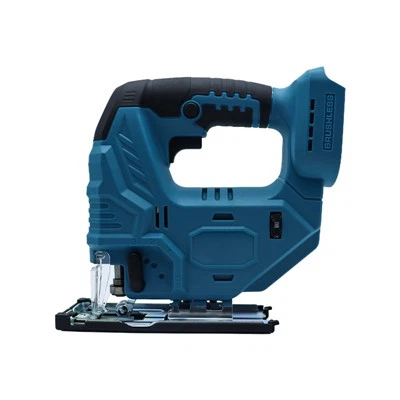
Jigsaws are handy for making intricate cuts and curves. The blades for jigsaws come in various shapes and tooth counts. Blades with a high tooth count, like 20 – 30 teeth per inch, are good for cutting thin materials and making precise cuts. Blades with a lower tooth count, around 10 – 14 teeth per inch, are better for cutting thicker materials.
Now, let’s talk about the material of the blade. The most common materials for woodworking saw blades are high – speed steel (HSS), carbide – tipped, and diamond – tipped.
High – speed steel blades are affordable and work well for general woodworking. They can handle a variety of woods, but they tend to dull faster than carbide – tipped blades. If you’re on a budget and doing light – duty woodworking, HSS blades are a good option.
Carbide – tipped blades are the go – to for most woodworkers. The carbide tips are extremely hard and can stay sharp for a long time. They’re great for cutting hard woods, plywood, and other composite materials. They can handle heavy – duty work and provide a clean, smooth cut. However, they are more expensive than HSS blades.
Diamond – tipped blades are used for cutting very hard materials, like stone, tile, and fiberglass. While they’re not as commonly used in traditional woodworking, if you’re working on projects that involve these materials, a diamond – tipped blade is a must.
Another factor to consider is the blade’s kerf. The kerf is the width of the cut made by the blade. A narrow kerf blade uses less wood, which can be cost – effective, especially when working with expensive woods. However, narrow kerf blades may not be as strong as wider kerf blades and can be more prone to breakage.
You also need to think about the blade’s gullet. The gullet is the space between the teeth. A large gullet is important for removing chips from the cut. If the gullet is too small, the chips can get stuck, which can cause the blade to overheat and dull quickly.
When it comes to brand and quality, it’s always a good idea to go with a reputable brand. Well – known brands usually have a better quality control process and offer blades that are more reliable. However, don’t just rely on the brand name. Read reviews from other woodworkers to get an idea of how a particular blade performs.
Now, I know this all sounds a bit overwhelming, but once you get the hang of it, selecting the right blade becomes second nature. And as a woodworking tools supplier, I’m here to help you every step of the way.
If you’re in the market for a new woodworking saw blade, or if you have any questions about which blade is right for your project, don’t hesitate to reach out. We have a wide range of high – quality blades to suit all your woodworking needs. Whether you’re a hobbyist or a professional, we’ve got you covered.
So, if you’re ready to take your woodworking to the next level with the right blade, get in touch with us. We’re eager to start a conversation and help you find the perfect blade for your saw.
Woodworking Tools References:
- "The Complete Guide to Woodworking Tools" by Tom Begnal
- "Woodworking Magazine" issues on saw blade selection
- "Fine Woodworking" articles related to woodworking saw blades
Shandong Bayley Hardware Tools Co., Ltd.
As one of the most professional woodworking tools manufacturers in China, we also support customized service. Please feel free to buy high quality woodworking tools for sale here from our factory. Good service and punctual delivery are available.
Address: Room 807, Building A, Global Sunshine City, Hedong District, Linyi City, Shandong Province
E-mail: Sale2@sdbayley.com
WebSite: https://www.shandongbayley.com/
